Determining how much money you need to retire comfortably is one of the most important financial questions you’ll face. In 2026, with inflation adjustments, evolving healthcare costs, and longer life expectancies, a personalized number matters more than ever. While there’s no universal answer, reliable benchmarks and planning strategies can help you build a realistic target.
👉📘 Use professional retirement planning resources to prepare for 2026 and beyond.
According to the latest Northwestern Mutual 2026 Planning & Progress Study, Americans believe they need an average of $1.46 million to retire comfortably — up significantly from previous years due to rising living costs. However, your actual number depends on your desired lifestyle, location, health, and other income sources like Social Security.
The 70-80% Rule: Estimating Your Annual Retirement Needs
Most financial experts recommend planning for 70-80% of your pre-retirement income to maintain a similar lifestyle.
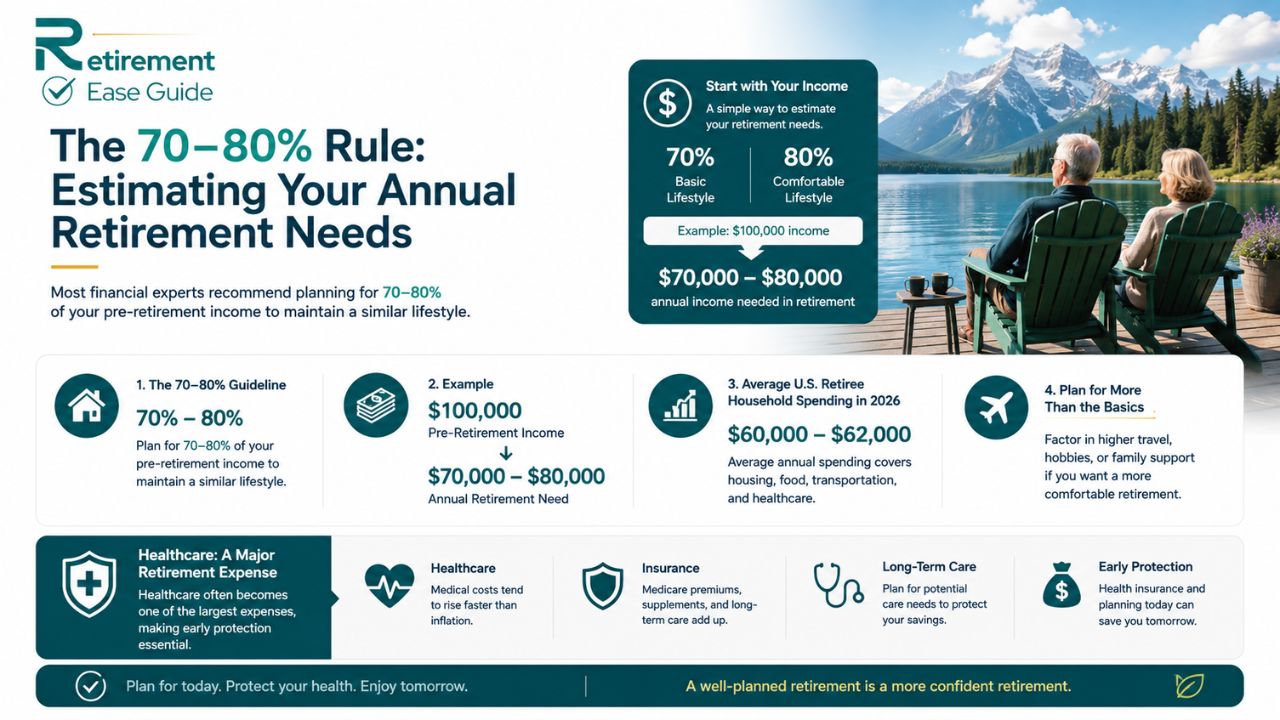
- If you currently earn $100,000 per year, you might need $70,000–$80,000 annually in retirement.
- Average U.S. retiree household spending in 2026 hovers around $60,000–$62,000 per year, covering housing, food, transportation, and healthcare.
Factor in higher travel, hobbies, or family support if you want a more comfortable retirement. Healthcare often becomes one of the largest expenses, making early protection essential.
👉🏖️ Build a retirement plan that supports your lifestyle and long-term goals.
Using the 25x Rule and Safe Withdrawal Rates
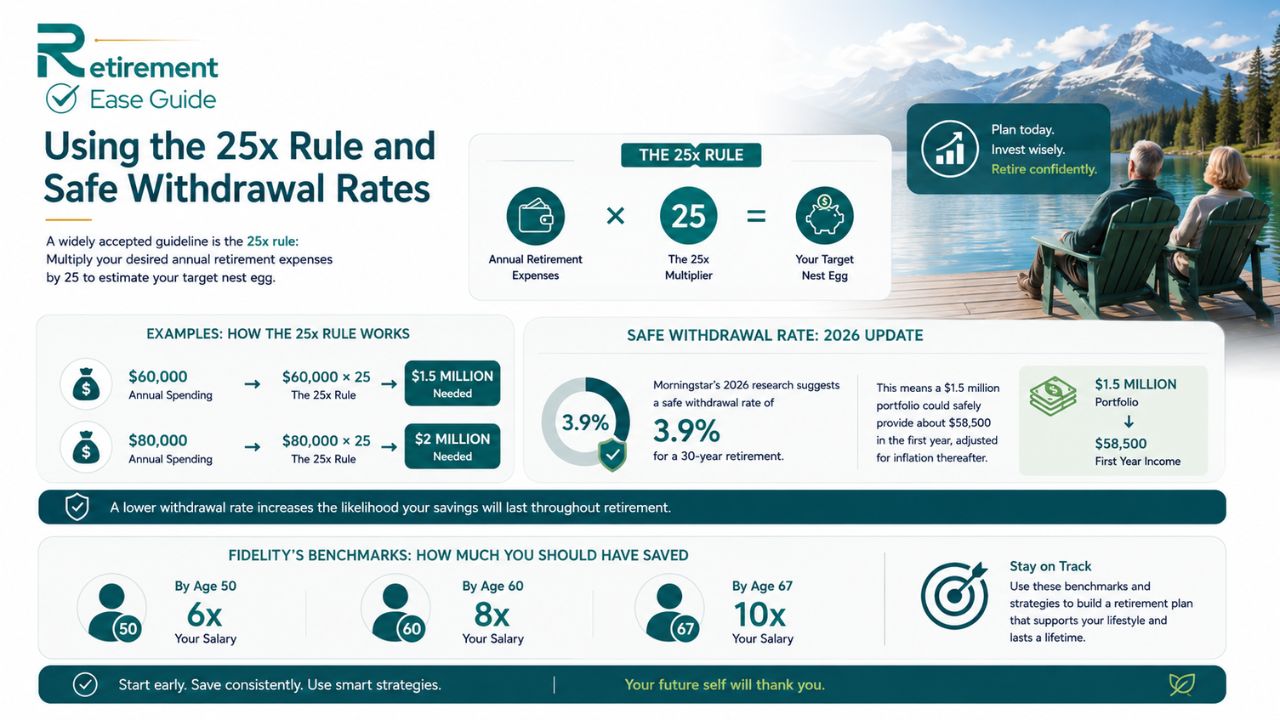
A widely accepted guideline is the 25x rule: Multiply your desired annual retirement expenses by 25 to estimate your target nest egg.
👉📈 Learn how to grow your savings for a secure and stress-free retirement.
- For $60,000 annual spending → $1.5 million needed.
- For $80,000 annual spending → $2 million needed.
Morningstar’s 2026 research suggests a safe withdrawal rate of 3.9% for a 30-year retirement (slightly higher than prior years due to improved market assumptions). This means a $1.5 million portfolio could safely provide about $58,500 in the first year, adjusted for inflation thereafter.
Fidelity’s benchmarks offer another helpful framework:
- By age 50: 6x your salary
- By age 60: 8x your salary
- By age 67: 10x your salary
Key Factors That Influence Your Retirement Number
Your location plays a major role. Retiring in a low-cost-of-living area or tax-friendly state can reduce the amount you need by 20-30%. Lifestyle choices matter too — active retirees often explore vibrant communities that balance amenities with affordability.
Many people in their 50s and 60s consider active adult communities to enjoy maintenance-free living and social opportunities. Discover the best active adult communities for active adults to see options that might fit your vision and budget.
👉🚀 Take the next step toward financial freedom and comfortable retirement living.
Don’t Forget Healthcare and Insurance Protection
Healthcare costs can easily add $5,000–$15,000+ per year per person before and after Medicare. Planning for this early prevents surprises that erode your savings.
Start by reviewing coverage options. Explore the best affordable health insurance for retirees to bridge gaps if retiring before age 65.
Once eligible for Medicare, understanding plan types is crucial. Compare Medicare vs. private insurance and Medicare Advantage vs. Medicare Supplement plans to choose what best protects your nest egg.
Long-term care represents another significant risk that could otherwise drain retirement funds. Learn how much long-term care insurance costs and evaluate policies that align with your needs.
Life insurance also remains relevant for legacy planning and spousal protection. Review the 5 best life insurance policies for seniors and compare term vs. whole life insurance for seniors.
Where You Live: Communities That Support Comfortable Retirement?
Choosing the right environment can enhance your quality of life while controlling costs. Popular destinations often feature resort-style amenities, wellness programs, and social activities.
For example, comparing major options helps narrow choices. Many retirees evaluate well-known spots like The Villages and Sun City. See The Villages vs Sun City for insights into lifestyle, costs, and fit.
👉📘 Use professional retirement planning resources to prepare for 2026 and beyond.
Conclusion
Figuring out how much money you need to retire comfortably requires honest assessment of your goals, risks, and lifestyle preferences. With disciplined planning, most people can reach a number that supports the retirement they envision.
At Retirement Ease Guide, we help simplify this journey with free calculators, detailed comparisons, and connections to trusted professionals. Take the next step today — explore our resources or reach out to an advisor to build a plan tailored to your 2026 retirement goals.
FAQs About Retirement Savings Needs
- How much do most people need to retire comfortably in 2026?
Surveys show Americans targeting around $1.46 million on average, though $1–2 million is common for a comfortable lifestyle depending on spending.
- Is the 4% rule still valid?
Morningstar recommends a slightly more conservative 3.9% safe withdrawal rate for 2026 to improve success odds over 30 years.
- What if I want to retire earlier than 65?
You’ll likely need a larger nest egg (30–35x expenses) to cover healthcare and living costs before Medicare and full Social Security benefits.
- How much does healthcare impact the total needed?
It can add hundreds of thousands over a lifetime. Proper Medicare and long-term care planning are essential.
- Do retirement communities reduce overall costs?
Many do through lower maintenance and shared amenities, though entry fees and monthly costs vary.
- Should I factor in Social Security?
Yes — the average benefit provides meaningful income (around $24,000–$25,000 annually). It reduces the burden on your savings.
- What’s the biggest mistake people make?
Underestimating healthcare, inflation, or longevity — or failing to protect assets with appropriate insurance.