
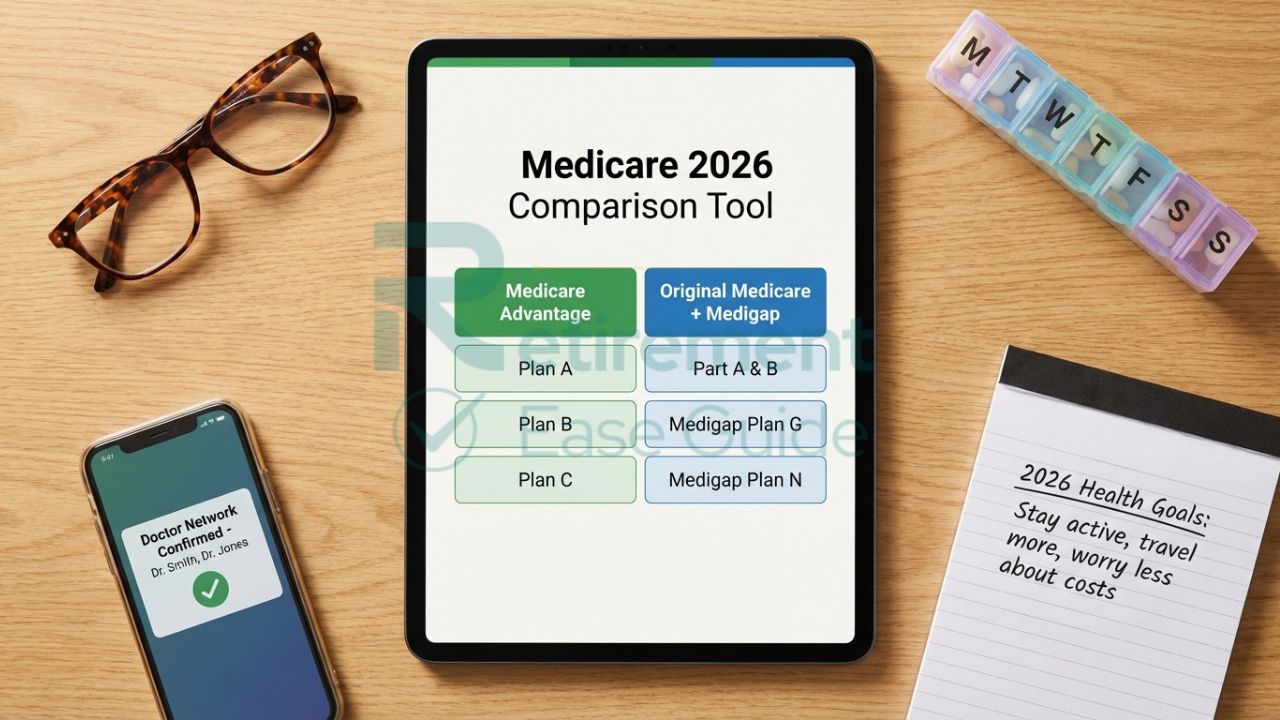
Picture this: You’ve just turned 65, retired after decades of hard work, and you’re finally ready to enjoy travel, grandkids, and hobbies. Then a routine check-up reveals a need for ongoing care, and suddenly healthcare costs loom large. For millions of U.S. seniors and their families, choosing the right health insurance after age 65 isn’t just important—it’s essential for peace of mind and financial security in 2026.
Healthcare expenses continue to rise, but good news comes from recent reforms. Thanks to the Inflation Reduction Act, prescription drug costs are more predictable: Medicare Part D now caps out-of-pocket spending at $2,100 for the year (once reached, you pay nothing more for covered drugs). Medicare Advantage (MA) plans average just $14 per month in additional premiums (beyond the standard Part B premium everyone pays). Many plans still offer extras like dental, vision, and hearing coverage, though some non-essential benefits have slimmed slightly in response to market adjustments.
Original Medicare (Parts A and B) forms the foundation for most seniors. Part A covers hospital stays, and Part B covers doctor visits and outpatient care. Everyone with Medicare pays the 2026 standard Part B premium of $202.90 per month (higher for those with higher incomes). From there, you have two main paths:
- Stick with Original Medicare + add a Medigap (Medicare Supplement) policy for gaps like deductibles and coinsurance, plus a standalone Part D drug plan.
- Switch to a Medicare Advantage (Part C) plan, an all-in-one private alternative that bundles A, B, and usually D, often with $0 premiums and extra perks.
This guide breaks down everything clearly—definitions included—so you and your family can compare during Open Enrollment (or special periods) and feel confident heading into 2026.
Understanding Medicare Basics in 2026
Original Medicare is the government-run program most people join at 65. It has two parts:
- Part A (Hospital Insurance): Covers inpatient hospital stays, skilled nursing facility care (limited days), hospice, and some home health. In 2026, the deductible is $1,736 per benefit period. After that, you pay $0 for the first 60 days, then daily coinsurance. Most people pay $0 premium for Part A if they or their spouse worked 40+ quarters.
- Part B (Medical Insurance): Covers doctor visits, outpatient care, preventive services, and durable medical equipment. The standard monthly premium is $202.90, with a $283 annual deductible. After the deductible, you typically pay 20% coinsurance.
Original Medicare has no annual out-of-pocket cap for Parts A and B (except the new Part D drug cap). That’s why most people add Medigap or choose MA.
Key 2026 updates make coverage stronger and more affordable:
- Medicare Advantage out-of-pocket maximum: Capped at $9,250 for in-network services (down slightly from 2025), protecting against high costs.
- Part D prescription drugs: $2,100 out-of-pocket cap (up from $2,000 due to inflation adjustment). After you hit it, catastrophic coverage kicks in—you pay $0 for covered drugs the rest of the year. The maximum deductible any plan can charge is $615. Drug-price negotiations (first round effective 2026) are lowering costs on 10 high-price medications, with more coming in future years. Insulin remains capped at $35/month for many.
- Average MA premiums: Dropped to about $14/month overall. Most plans (67%) charge $0 beyond Part B.
- Other trends: Benefits like dental (98% of plans), vision (99%), and hearing (98%) remain widely available. Some extras (over-the-counter allowances, meals, transportation) appear in fewer plans than last year as insurers adjust. Fewer options in certain rural areas, prompting some seniors to switch back to Original Medicare + Medigap for more predictability and nationwide doctor choice.
Everyone pays the Part B premium, but MA or Medigap can offset other costs. Preventive services (annual wellness visits, screenings) remain free under both paths.
Medicare Advantage (Part C) Plans: Pros, Cons, and Top Providers for 2026
Medicare Advantage plans are offered by private insurers approved by Medicare. They replace Original Medicare and must cover at least what Parts A and B do—often including Part D drug coverage. You pay your Part B premium plus any plan premium (frequently $0).
How they work: Enroll instead of Original Medicare. Most are HMO (need referrals, in-network only), PPO (more flexibility, out-of-network at higher cost), or Special Needs Plans (SNP) for chronic conditions, dual-eligible, or institutionalized people.
Pros:
- Lower or $0 premiums (average $14/month extra).
- Out-of-pocket maximum ($9,250 in-network max in 2026).
- Extra benefits: Dental, vision, hearing, fitness (SilverSneakers-style), meals, transportation—often included at little or no extra cost.
- Many include Part D drugs.
- Some reduce your Part B premium (32% of plans offer rebates).
Cons:
- Network restrictions—your doctors must be in-network (check first!).
- Prior authorizations for some services or drugs.
- Potential provider or benefit changes annually.
- In 2026, some non-core extras (OTC, meals) are less common as plans focus on core coverage amid regulatory and cost pressures.
- Out-of-network care (except emergencies) costs more or isn’t covered.
2026 trends: Benefits remain robust for core extras, but some slimming in supplemental perks. Nearly 98% of beneficiaries still have access to a $0-premium MA-PD plan. Enrollment is projected stable around 48% of Medicare beneficiaries.
Top-rated providers for 2026 (based on CMS star ratings, member satisfaction, network size, and reviews from U.S. News, NerdWallet, Forbes, Investopedia):
Use Medicare.gov Plan Finder to check your area—ratings and availability vary by ZIP code.
| Provider | CMS Star Rating Highlights (2026) | Availability | Strengths | Best For |
| Aetna (CVS Health) | High (81% members in 4+ stars; often 4.0+ overall) | 43 states + DC | Widespread, strong ratings, extras | Overall value, high satisfaction |
| UnitedHealthcare | Strong (78% in 4+ stars) | 49 states + DC | Largest network, PPO options | Nationwide doctor choice |
| Humana | Solid for wellness/chronic care | Most states | Strong member experience, fitness focus | Chronic conditions, extras |
| Devoted Health | Top member experience | 29 states | High satisfaction, $0 premiums | Personalized care |
| Kaiser Permanente | Often 4.5+ where available | Limited regions | Integrated care, high quality | Areas with Kaiser facilities |
| Blue Cross Blue Shield | Varies by affiliate; competitive | Many states | Local networks, reliable | Regional preferences |
Examples: Aetna and UnitedHealthcare frequently top “best overall” lists for ratings and availability. Devoted Health excels in satisfaction. Always verify your doctors and drugs are covered—use the plan’s formulary and directory.
Tips: Compare via Medicare.gov/plan-compare. Look at total estimated costs (premium + out-of-pocket), not just premium. HMO for lower costs; PPO for flexibility. Read 2026 star ratings (4+ stars = good quality).
Medigap (Medicare Supplement) Plans: Pros, Cons, and Top Companies for 2026
Medigap policies are sold by private insurers to fill Original Medicare gaps. They pay for deductibles, coinsurance, and copays (e.g., the 20% Part B coinsurance).
Pros:
- Freedom to see any doctor or hospital that accepts Medicare (no networks).
- Predictable costs—no surprise bills for covered services.
- Nationwide coverage.
- Guaranteed renewable (can’t be canceled if premiums paid).
Cons:
- Higher monthly premiums ($130–$250+ average, depending on age, gender, state, and plan letter).
- No extra benefits like dental/vision (you need separate Part D or riders).
- Must have Original Medicare + Part D.
- Not available in Massachusetts, Minnesota, Wisconsin (they have different supplements).
Popular plans in 2026:
- Plan G: Most comprehensive for new enrollees—covers Part A deductible, excess charges, foreign travel emergency. Most popular.
- Plan N: Lower premium; covers most but you pay copays for some doctor visits/ER.
- High-Deductible Plan G: Lower premium but you pay first ~$2,800 out-of-pocket before coverage starts.
Top companies (largest, highest-rated for service and rates):
- UnitedHealthcare/AARP (largest market share, strong nationwide).
- Cigna (competitive pricing).
- Humana.
- Aetna.
- Mutual of Omaha (good for high-deductible options).
Shop during your Medigap Open Enrollment (6 months after Part B starts—no medical underwriting). Some guaranteed-issue rights apply if leaving an employer plan.
Other Considerations: Part D, Short-Term/Under-65 Options, and Retiree Coverage
Standalone Part D: Essential if you have Original Medicare + Medigap. Average premiums dropped to ~$34.50 in 2026. Choose based on your drugs—use Medicare Plan Finder. The $2,100 cap applies here too.
For those under 65 retiring early: Marketplace ACA plans (via HealthCare.gov) offer subsidies. Top carriers: Blue Cross Blue Shield, Kaiser. Short-term plans (UnitedHealthcare) bridge gaps but have limits.
Employer retiree coverage: Many plans are phasing out or shifting to MA. Check if yours is creditable (covers as well as Medicare) to avoid penalties.
How to Choose the Best Option for You in 2026?
Follow this step-by-step guide—no one-size-fits-all:
- Assess needs: List current/future doctors, hospitals, prescriptions, and health conditions. Prefer flexibility or low premiums?
- Use tools: Go to Medicare.gov/plan-compare or call 1-800-MEDICARE. Enter your ZIP, drugs, and doctors—see side-by-side costs and ratings.
- Compare total costs: Premiums + deductibles + copays + out-of-pocket max. Factor in extras value.
- Check quality: Look for 4+ star ratings. Read reviews on CMS site or NerdWallet.
- Get help: Free, unbiased counseling from your State Health Insurance Assistance Program (SHIP). Or consult a fiduciary Medicare advisor (not commission-based).
- Avoid scams: Never pay upfront for Medicare; official reps don’t cold-call.
Enroll or switch during Open Enrollment (Oct. 15–Dec. 7 for 2027 coverage) or qualifying events. Test-drive with estimates—many switch successfully each year.
Conclusion
In 2026, Medicare Advantage often wins for low premiums, out-of-pocket protection, and extras like dental and vision—ideal if your doctors are in-network. Medigap + Original Medicare shines for doctor choice and predictable costs, especially if you travel or value flexibility.
The “best” plan is the one that fits your life. With the Part D $2,100 cap, drug negotiations, and stable options, seniors have powerful tools to control costs and focus on health.
Don’t wait—review your coverage now. Use Medicare.gov, talk to a SHIP counselor, or gather your family for a quick comparison. Informed decisions mean better health, more savings, and confidence in retirement. You’ve earned it.
FAQs
Q: Can I switch from MA to Original Medicare in 2026?
A: Yes, during Open Enrollment or with a trial right in your first year.
Q: Does Medigap cover prescriptions?
A: No—add Part D separately.
Q: Are all MA plans the same?
A: No—networks, extras, and costs vary widely by ZIP code.
Q: What if I have employer retiree coverage?
A: Check if it’s creditable; you may delay Part D without penalty.
Q: How do I know if my doctor is in-network?
A: Always ask the plan or check directories before enrolling.