- Home
- Senior Care Homes
Senior Care Homes Near Me: A Comprehensive Guide to Quality Long-Term Care
More than a residence—it’s a community that feels like family.
As we or our loved ones age, the conversation often shifts from simple lifestyle upgrades to more specialized support. While “independent living” is about freedom and social activity, searching for “senior care homes near me” often signifies a need for a higher level of dedicated, professional assistance.
At Retirement Ease Guide, we recognize that choosing a senior care home is a deeply personal and often emotional journey. This guide is designed to provide you with the clinical, financial, and lifestyle information you need to make an informed choice for long-term wellness.


Plan Smarter — Connect with a Financial Advisor
Get personalized guidance from a Trusted financial advisor who understands retirement tax rules, withdrawal sequencing, and Social Security strategy.
What is a Senior Care Home?
A senior care home (often referred to as a residential care home or a skilled nursing facility) is a residential setting that provides 24/7 care for seniors who require assistance with most daily tasks. Unlike active adult communities, these homes are staffed by medical professionals, including licensed nurses and certified nursing assistants (CNAs).
Core Services Provided:
- 24/7 Supervision: Round-the-clock monitoring for safety and medical needs.
- ADL Assistance: Dedicated help with Activities of Daily Living, such as bathing, dressing, grooming, and mobility.
- Medication Management: Professional administration of prescriptions to ensure accuracy and safety.
- Specialized Nutrition: Chef-prepared meals tailored to specific health conditions like diabetes or heart disease.
If you are currently active but planning for the future, it is helpful to understand how these services differ from other options. You can explore our complete guide to independent living to see which level of care currently matches your needs.
Connect — Quick Request
Choose a request type and submit a short form. We’ll match you with a trusted partner within 48 hours.

Senior Care Homes vs. Assisted Living: The Key Differences
It is common to confuse these two terms, but the distinction is vital for both cost and quality of care.
|
Feature |
Assisted Living |
Senior Care Home (Nursing Home) |
|
Medical Care |
Limited/Intermittent |
24/7 Skilled Nursing |
|
Independence |
High |
Low to Moderate |
|
Setting |
Apartment-style |
Clinical or Residential |
|
Cost |
Mid-range |
High (Due to staffing) |
For families unsure of which level is required, our How to Choose a Community checklist provides a step-by-step assessment of physical and cognitive needs.
The Financial Reality: Paying for Senior Care in 2026
The cost of high-level senior care is a significant factor in any retirement plan. In 2026, the national average for a semi-private room in a skilled nursing facility has risen to approximately $9,500 – $11,000 per month.

Looking for Perfect Community According to Your Needs?
Find the right community for your lifestyle—nationwide. Compare amenities, pricing, and neighborhood features across top-rated communities.
How to Fund Long-Term Care:
- Long-Term Care Insurance: Ideally, these policies are started years in advance to cover the high costs of “care homes.”
- Medicare vs. Medicaid: While Medicare typically only covers short-term “rehab” stays (up to 100 days), Medicaid may cover long-term care for those who meet specific income and asset requirements.
- Home Equity: Many families use the proceeds from a home sale to fund a “Life Plan” or CCRC (Continuing Care Retirement Community) entrance fee.
To see how your current assets align with these costs, we recommend using our Retirement Income Estimator or our Savings Goal Calculator to project your long-term financial health.
Quality Control: The "Red Flags" Touring Checklist
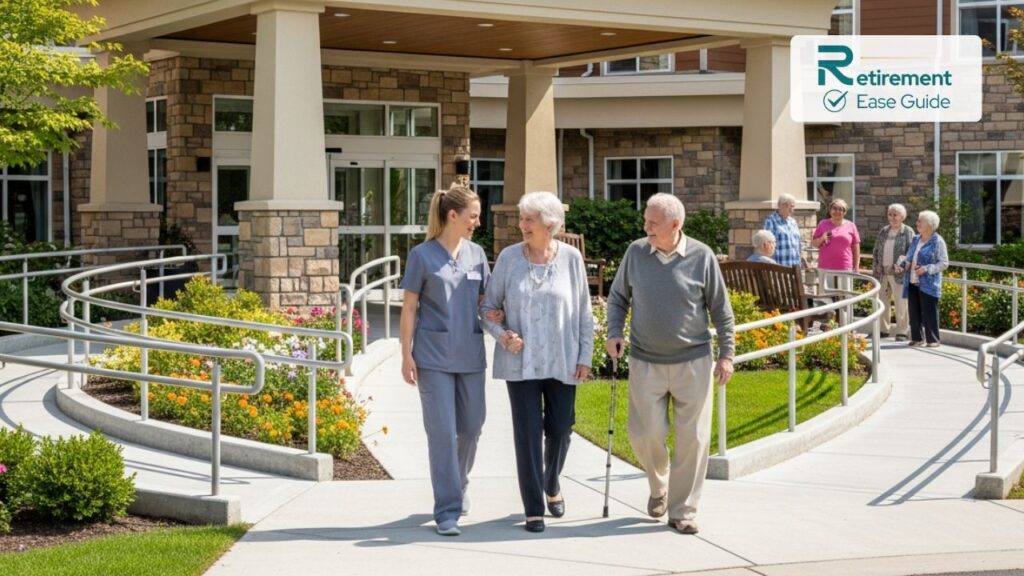
When searching for senior care homes near me, your biggest concern is safety and quality of life. During your physical tour, look past the fresh paint and lobby flowers. Use this checklist to spot potential “Red Flags”:
- Odors and Cleanliness: A lingering smell of urine or heavy industrial “cover-up” scents can indicate a lack of consistent hygiene and staff attention.
- Unanswered Call Lights: Pay attention to how long it takes for a resident’s call light to be answered. If you hear alarms ringing for more than a few minutes without a response, it is a major sign of understaffing.
- Staff Interaction: Watch the staff when they don’t know you’re looking. Are they making eye contact and speaking kindly to residents, or do they seem rushed, stressed, and dismissive?
- Resident Appearance: Do the residents look groomed? Clean hair, trimmed nails, and dressed-for-the-day clothing are signs of high-quality personalized care.
- The “Silent” Wing: While a quiet environment is nice, an unnaturally silent home can mean a lack of activity and social engagement. Look for a “bustle” of life in common areas.
Looking for Perfect Community According to Your Needs?
Find the right community for your lifestyle—nationwide. Compare amenities, pricing, and neighborhood features across top-rated communities.
Navigating Family Dynamics: The Decision-Making Guide
Choosing a senior care home is often a family decision, and it’s rarely easy. Guilt and sibling disagreements are the most common hurdles.
How to Talk to Your Parents About a Care Home
Avoid “telling” them they have to move. Instead, lead with empathy and “I” statements:
- Bad: “You can’t live alone anymore; you’re going to fall.”
- Good: “I worry about you being alone at night, and I want us to find a place where you can feel safe and pampered.”
Involve them: Ask, “What are the three most important things you’d want in a new home?” This gives them back a sense of control.
Resolving Sibling Disagreements
If siblings disagree on the level of care needed, consider bringing in a neutral third party. A geriatric care manager or a professional advisor can provide an objective clinical assessment. Remember: the goal isn’t to “win” the argument, but to ensure your parent’s safety and dignity.
Transparency: Using State Inspection Reports
In 2026, data is your best friend. Every licensed senior care home is subject to state inspections, and these reports are public records.
- Medicare Star Ratings: Use the Medicare “Care Compare” tool to see a 1-to-5 star rating based on health inspections, staffing ratios, and quality measures.
- Statement of Deficiencies (Form 2567): This is the formal document where state inspectors list violations. A few minor “housekeeping” citations are normal; “Immediate Jeopardy” or “Harm” citations are major red flags.
State Ombudsman: Every state has a Long-Term Care Ombudsman. They are independent advocates who can give you unbiased “insider” information on local homes.
The Future of Care: "Smart Home" Technology in 2026
Modern senior care homes are no longer just buildings; they are high-tech wellness hubs. When researching, ask if the community utilizes these 2026 Smart Care trends:
- AI-Powered Fall Detection: Advanced sensors (no wearables required) can now detect a fall the second it happens—and even predict one by analyzing changes in a resident’s walking pattern.
- Remote Patient Monitoring (RPM): This tech continuously tracks vitals like heart rate, oxygen levels, and sleep patterns, allowing medical staff to intervene before a health issue becomes a crisis.
- Telehealth Integration: Top-tier homes now feature dedicated “Virtual Clinics” where residents can see world-class specialists via high-definition video, reducing the stress of frequent hospital trips.
- Cognitive Tech: For those in memory care, VR (Virtual Reality) and “Digital Companion” AI are being used to reduce anxiety and improve memory recall.
Connect with an Advisor
Fill a short form and our trusted advisors will match you with communities and financing options that fit your goals.

Key Amenities in Modern Senior Care Homes
Even in a high-care environment, “quality of life” remains the priority. Modern senior care homes in 2026 focus on “holistic wellness” rather than just medical maintenance.
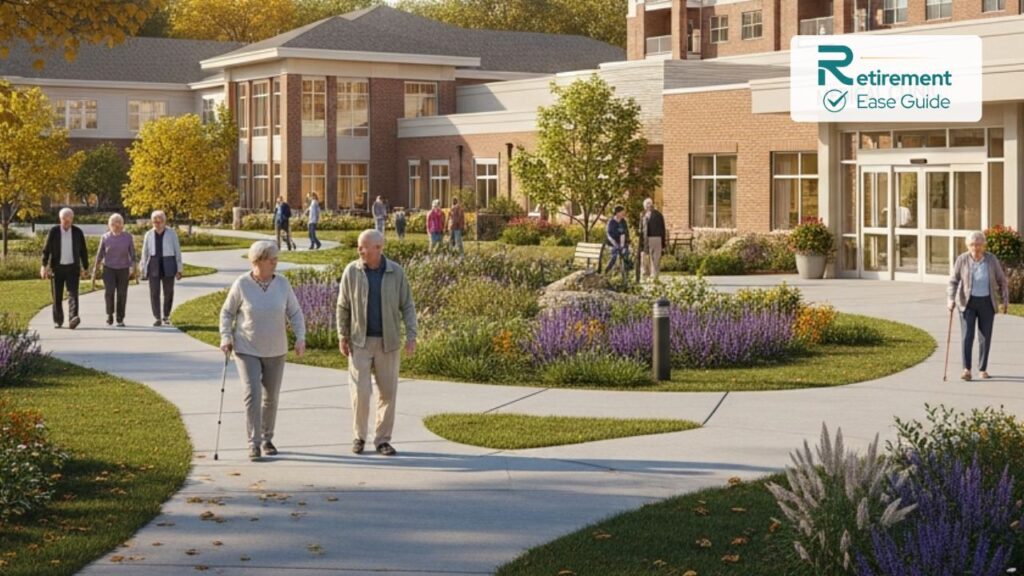
- Therapeutic Gardens: Designed for safe, outdoor wandering and sensory stimulation.
- Memory Care Wings: Specialized units for those with Alzheimer’s or Dementia, featuring high-security and cognitive therapy programs.
- Rehabilitation Suites: On-site physical, occupational, and speech therapy rooms.
Pet Therapy: Many homes now bring in therapy animals to help reduce resident anxiety and loneliness.

Need Medicare or Health Insurance Support?
Compare Medicare options, supplemental coverage, and long-term care insurance with trusted specialists. Get clear answers based on your health needs. Secure and confidential. ✓ Compare plans • ✓ Check benefits • ✓ Lower your premiums
Final Thoughts: Navigating Your Care with Confidence
Choosing a senior care home is about finding a balance between medical necessity and personal dignity. It is a transition that requires both a clear financial strategy and an emotional support system.
At Retirement Ease Guide, we are committed to making this process as stress-free as possible. We offer several ways to help you move forward:
- Free Personalized Guidance: Access our full library of expert guides and articles to stay informed on the latest senior care trends.
- Custom Community & Professional Matching (At No Cost): If you are feeling overwhelmed, we can help. At your request, we will match you with senior care homes that fit your specific location and medical needs. Additionally, we can connect you with Medicare and Insurance specialists or financial advisors for a free initial consultation to ensure your care is fully funded and your health coverage is optimized.
Ready to find the right fit? Explore our planning calculators today or request a match with a professional to start your journey toward a secure and supported retirement.
By understanding the different types of communities, evaluating costs and services, and focusing on what truly matters to you, you can find a place that feels like home—now and in the years ahead.
At Retirement Ease Guide, we are committed to helping you navigate this journey with clarity and confidence. Retirement is not just about where you live—it’s about how you live.
Retirement Ease Guide’s Quick Tools
Our free interactive tools help you calculate income, savings targets, and compare living costs.
Retirement Income Estimator
Project income from savings, pensions & Social Security.
Savings Goal Calculator
Plan how much to save monthly to reach your goals.
Cost of Living Comparison
Evaluate differences between Texas cities and other states.
Withdrawal Planner
Create a sustainable withdrawal strategy for long-term comfort.
Frequently Asked Question
1. How much do senior care homes cost per month in 2026?
In 2026, the cost for a senior care home (skilled nursing) typically ranges from $9,500 to $11,000 per month for a semi-private room. Costs vary significantly based on your state and the level of specialized medical care required. To see how these costs fit into your long-term budget, try our Savings Goal Calculator.
2. Is a senior care home the same as assisted living?
No. While both provide housing and support, a senior care home offers 24/7 skilled medical nursing for those with complex health needs. Assisted living is designed for seniors who are relatively independent but need help with daily tasks like bathing or meal prep. For more help deciding, check out our How to Choose a Community guide.
3. Does Medicare cover the cost of long-term senior care homes?
Medicare generally does not cover long-term stays in a senior care home. It typically only pays for short-term “rehabilitative” care (up to 100 days) following a hospital stay. Long-term care is usually funded through private pay, long-term care insurance, or Medicaid. We recommend you connect with a professional advisor to review your specific insurance coverage.
4. What is the "Immediate Jeopardy" rating in a care home report?
“Immediate Jeopardy” is the most serious citation a senior care home can receive during a state inspection. It means the facility’s non-compliance has caused, or is likely to cause, serious injury or death to a resident.
5. Can a senior care home refuse to admit someone with Dementia?
Most senior care homes are equipped to handle basic cognitive decline, but some may refuse admission if a patient exhibits aggressive behaviors that they aren’t staffed to manage. In these cases, you should look specifically for Memory Care Wings, which offer enhanced security and specialized staff. Our custom community matching service can help you find a home equipped for high-acuity dementia.
6. How can I ensure my loved one is getting good care?
Regular, unannounced visits are the best way to monitor care. Additionally, look for “Smart Care” technology, such as AI-fall detection and Remote Patient Monitoring, which provide an extra layer of safety. You can also consult your local State Ombudsman—an independent advocate for senior residents—to get unbiased feedback on a home’s reputation.
Get Personalized Retirement Guidance
Have questions about retirement planning or communities? Fill out the form below and our team will connect you with the right resources.
 We respect your privacy. Your information will only be used to respond to your inquiry and connect you with trusted partners if requested.