You want a retirement home that can adapt as your needs change — a place where you can live independently today and seamlessly access higher levels of care tomorrow without the stress of moving. That’s exactly what a Life Plan Community (also known as a Continuing Care Retirement Community or CCRC) is designed to provide.
In 2026, Life Plan Communities remain one of the most comprehensive and secure retirement options for seniors who value predictability, quality care, and peace of mind. This guide explains what a Life Plan Community is, how it works, the different contract types, realistic costs, benefits, and how to decide if it’s the right choice for you.
 “See Which Life Plan Community Fits Your Lifestyle”

What Is a Life Plan Community?
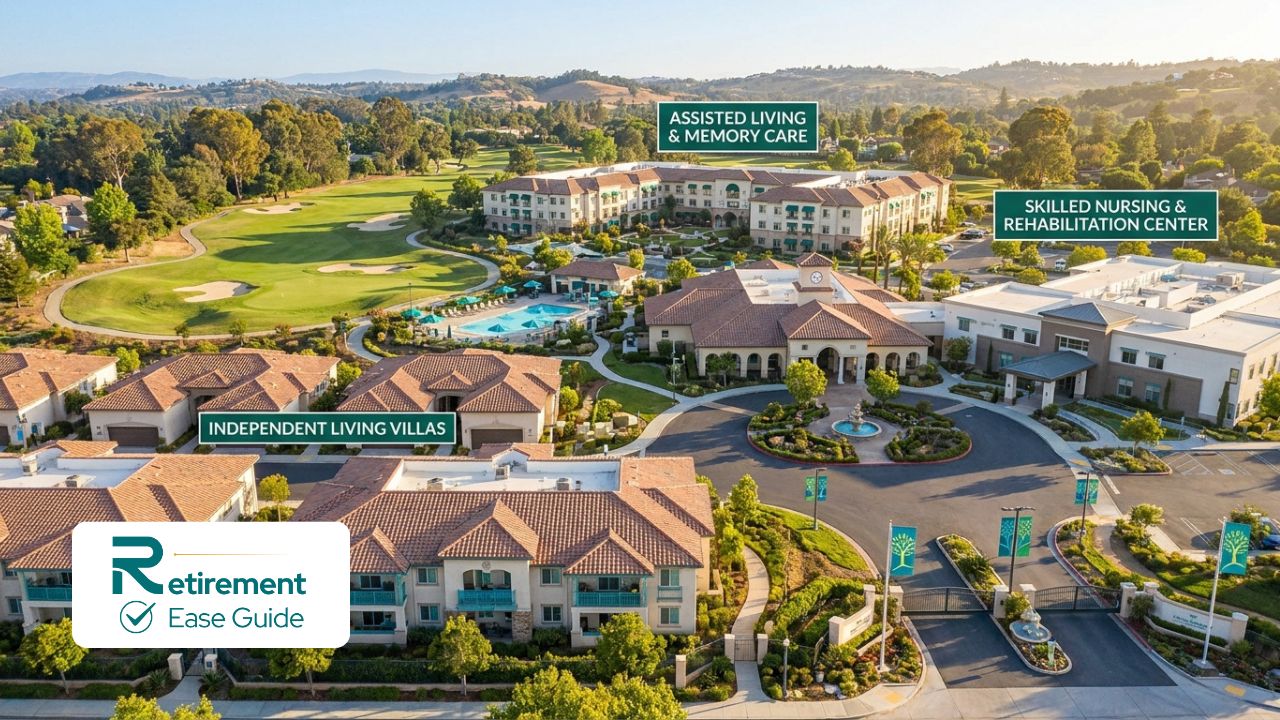
A Life Plan Community is a senior living campus that offers a full continuum of care on one site. You move in at the independent living level and, as your health needs change, you can transition to assisted living, memory care, or skilled nursing — all without leaving the community.
This “lifetime care” model eliminates the disruption and uncertainty of moving between different facilities later in life. Most Life Plan Communities feature beautiful campuses with resort-style amenities, making them attractive to active, healthy seniors who want to enjoy retirement while planning for the future.
For context on independent living before higher care is needed, see our guide to 55+ active lifestyle communities.
How Life Plan Communities (CCRCs) Work?
When you join a Life Plan Community, you typically pay a one-time entrance fee and ongoing monthly service fees. In return, the community guarantees you access to the level of care you need for the rest of your life.
“Find the Best Life Plan Communities Near You”
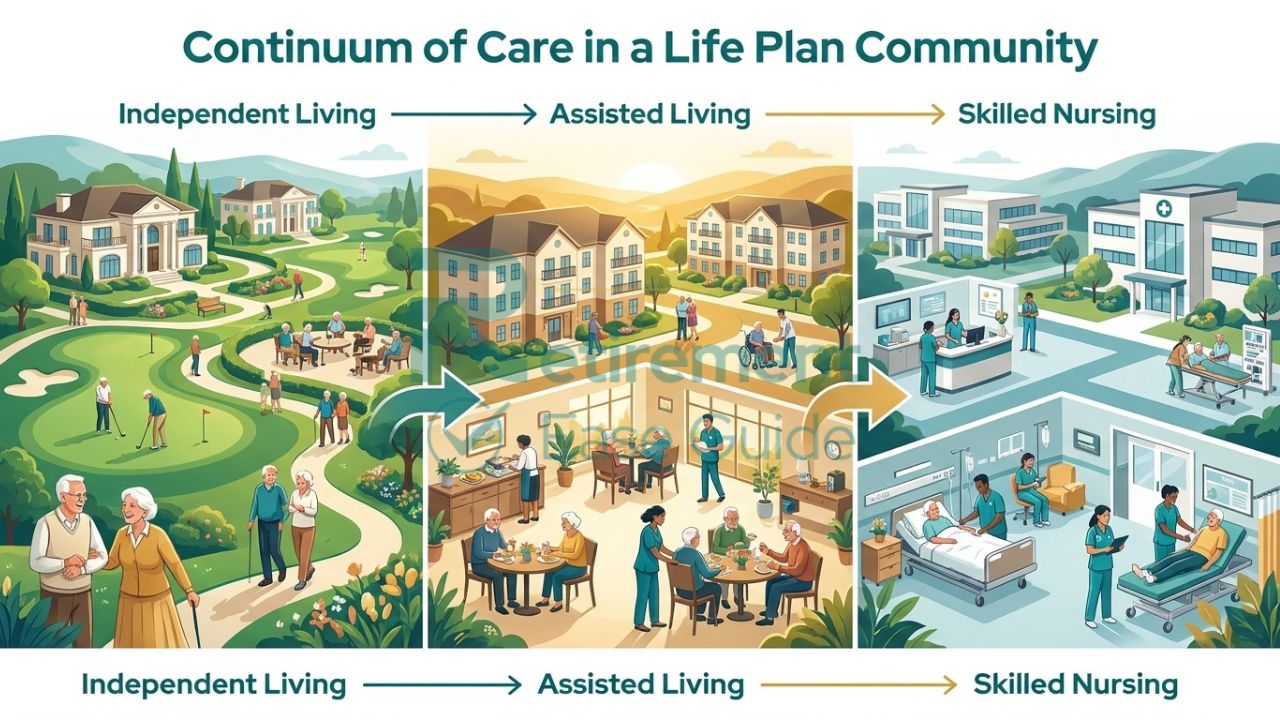
You live in your own apartment or villa and enjoy all the amenities while remaining as independent as possible. The community handles maintenance, meals, activities, transportation, and care coordination when needed.
The Three Main Contract Types (Type A, B, and C)
Life Plan Communities use three primary contract types that determine how costs work:
Type A (Life Care / Extensive Contract)
Highest entrance fee, but future care is largely prepaid. Monthly fees remain relatively stable even if you need assisted living or nursing care. Best for those who want maximum predictability.
Type B (Modified / Partial)
Moderate entrance fee. A certain number of days of higher care are included. After that, you pay discounted rates. Offers a good balance of cost and protection.
Type C (Fee-for-Service)
Lowest entrance fee and monthly fees at independent living. You pay full market rates when you need higher levels of care. Best for healthier residents comfortable assuming more risk.
Average Cost of Life Plan Communities in 2026
Costs vary by location, contract type, and unit size. Here are realistic national averages:
See Which Life Plan Community Fits Your Lifestyle in 60 Seconds
| Contract Type | Entrance Fee Range | Monthly Fee (Independent Living) | Best For |
| Type A | $300,000 – $1.2M+ | $3,800 – $6,500 | Maximum predictability |
| Type B | $200,000 – $700,000 | $3,200 – $5,500 | Balanced protection |
| Type C | $100,000 – $450,000 | $2,800 – $4,800 | Lower upfront cost |
For more options across states, see our guide to the best 55+ active adult communities in Florida, Arizona & Texas.
Benefits of Choosing a Life Plan Community
Plan Your Retirement Budget Before Choosing a Community

- Lifetime care guarantee on one campus
- Predictable budgeting (especially with Type A contracts)
- High-quality amenities and social programs
- Peace of mind for you and your family
- Strong resident satisfaction and sense of community
Life Plan Communities vs Other Senior Living Options
Life Plan Communities provide more comprehensive long-term security than standard independent living or assisted living alone. However, they require a larger upfront investment. For comparison with more affordable options, see our guide to the best affordable 55+ communities in Florida 2026.
Best Life Plan Communities in Popular States
Florida, Arizona, Pennsylvania, and North Carolina have some of the strongest Life Plan Communities. Many offer beautiful campuses with excellent healthcare partnerships.
Check Health Insurance Options Before Moving to a New State
Is a Life Plan Community Right for You?
A Life Plan Community is often ideal if you:
- Value long-term security and predictability
- Can afford the entrance fee
- Want to age in place without multiple moves
- Appreciate resort-style amenities and social connection
It may not be the best fit if you prefer maximum flexibility or have very limited assets.
Conclusion
A Life Plan Community can provide tremendous peace of mind by allowing you to age in place with security, dignity, and access to care when you need it. While the upfront costs are significant, the long-term benefits often make it a wise investment for many retirees.
Take time to research communities that match your lifestyle and budget, visit in person, and review contracts thoroughly. The right Life Plan Community can transform your retirement years into a time of comfort and joy.
At Retirement Ease Guide, we match you with the perfect Life Plan Community based on your needs, location, and budget.
Get your free, no-obligation personalized recommendations today. Click here to get started now.
Frequently Asked Questions (FAQ)
What is a Life Plan Community?
A senior living campus that offers independent living through skilled nursing on one site with a contract guaranteeing future care.
How much does a Life Plan Community cost in 2026?
Entrance fees typically range from $100,000 to over $1 million, with monthly fees from $2,800 to $6,500+.
What is the difference between Type A, B, and C contracts?
Type A offers the most prepaid care, Type B partial, and Type C pay-as-you-go for higher levels of care.
Are Life Plan Communities only for wealthy retirees?
While many are upscale, there are options at different price points. Some also accept Medicaid for higher levels of care.
Can I leave a Life Plan Community if I change my mind?
Most contracts include refund provisions, though details vary by community and contract type.
How do I find the best Life Plan Community?
Tour multiple communities, review contracts carefully, and work with an experienced advisor.