You’ve reached the stage where you’re thinking seriously about your next chapter — a place that feels like home, with peace of mind that care will be available if your needs ever change. For many pre-retirees and recent retirees, a continuing care retirement community (also called a Life Plan Community or CCRC) offers exactly that promise: one campus where you can age in place from independent living all the way through assisted living, memory care, or skilled nursing.
 “Find the Best 55+ Communities Near You”
But the big question on everyone’s mind is simple: how much does a continuing care retirement community cost in 2026? Understanding the true cost of a CCRC — including entrance fees, monthly service fees, and contract types — is one of the most important steps in planning a secure retirement. This 2026 guide breaks down national and regional pricing, contract differences, and real-world factors so you can decide whether a CCRC fits your budget and lifestyle.
What Is a Continuing Care Retirement Community?
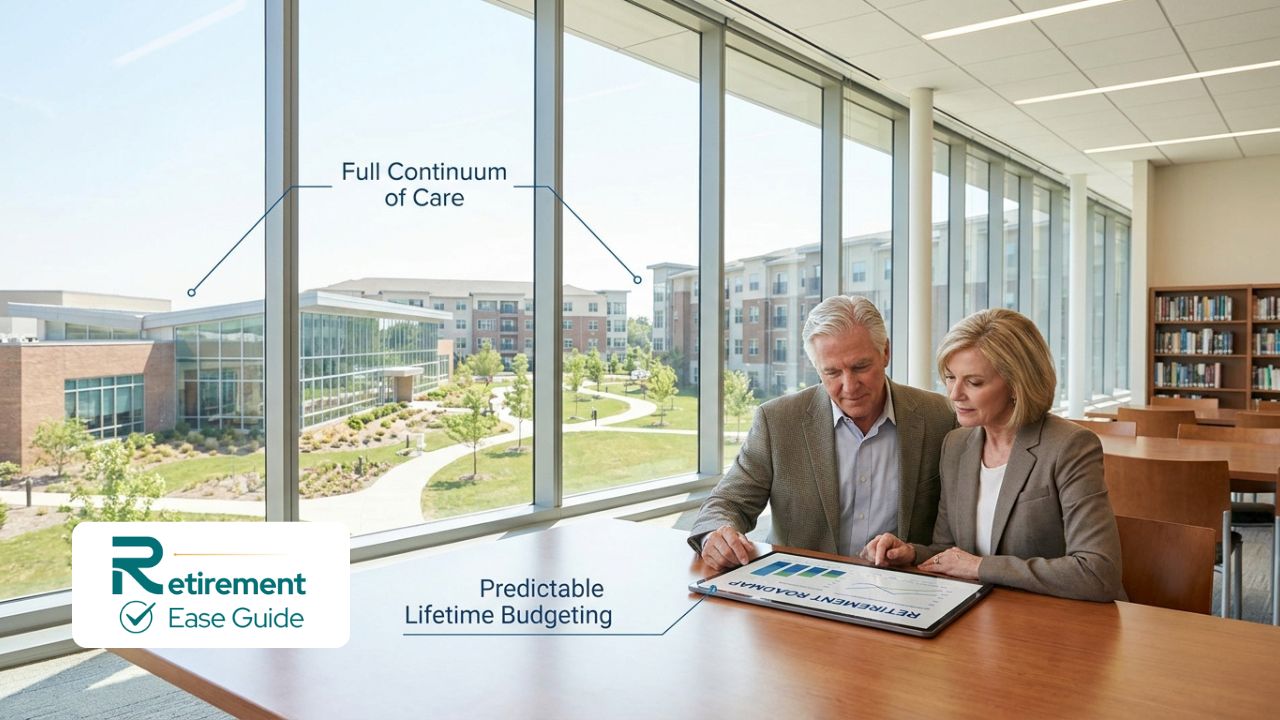
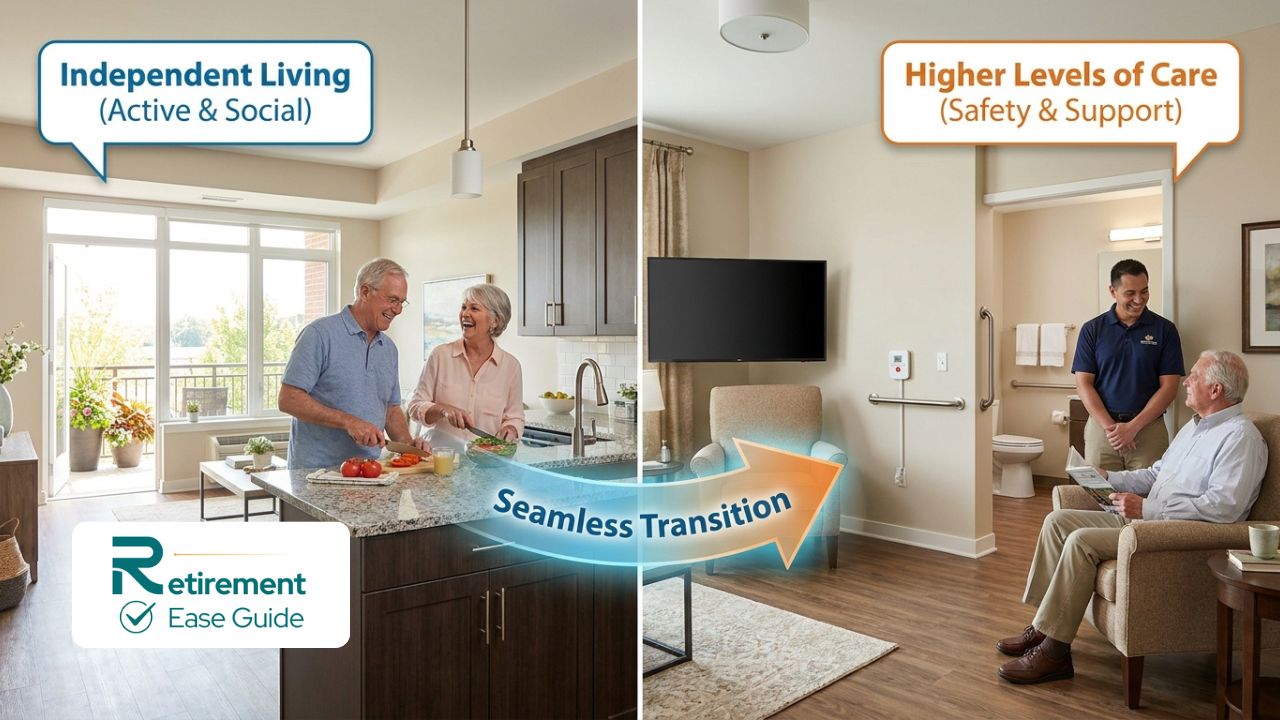
A continuing care retirement community is a senior living campus that offers a full continuum of care on one site. You move in at the independent living level and, as needs change, transition seamlessly to higher levels of care without leaving the community or searching for new housing.
Plan Your Retirement Budget Before Choosing a Community
Most CCRCs require two payments:
- A one-time entrance fee (often partially or fully refundable)
- Ongoing monthly service fees
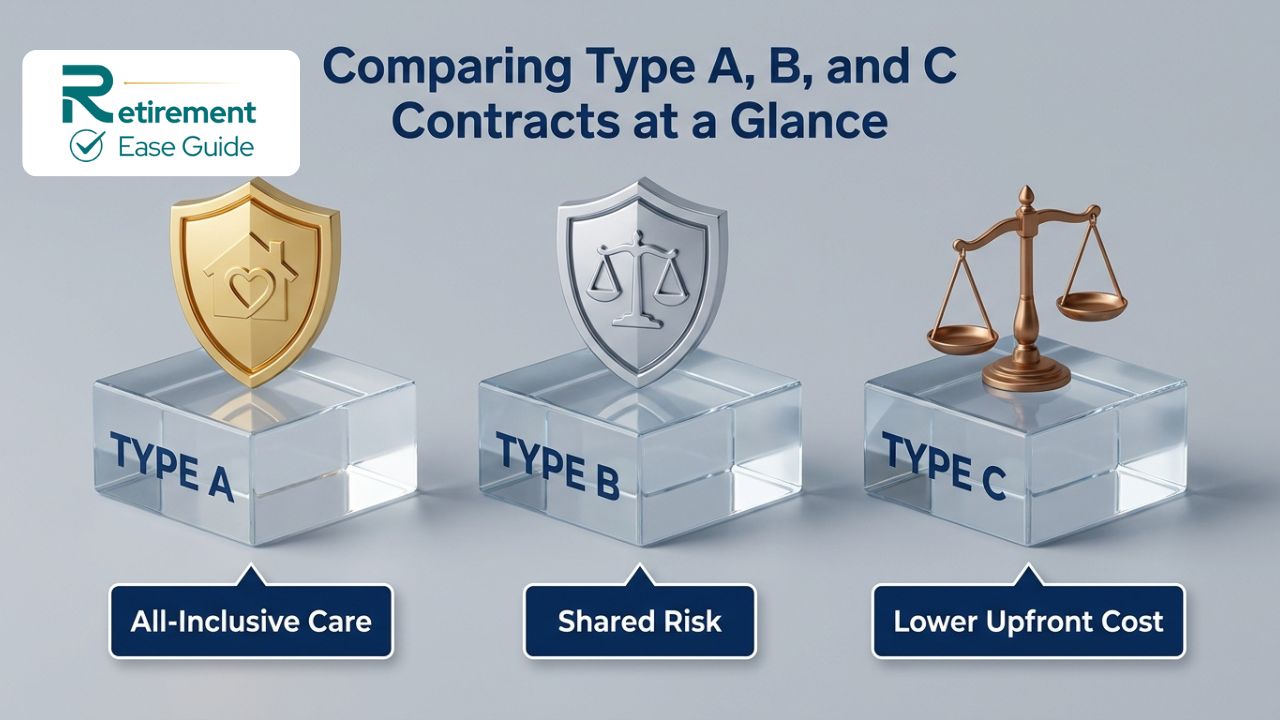
There are three main contract types that determine how costs work:
- Type A (Life Care / Extensive): Highest upfront cost, but future care is largely prepaid with little or no monthly fee increase.
- Type B (Modified): Mid-range fees; some care days are included, then you pay discounted rates.
- Type C (Fee-for-Service): Lowest upfront and monthly fees at independent living, but you pay full market rates when higher care is needed.
CCRCs are regulated differently by state and often require significant financial review during the application process.
Breaking Down the Real Cost Structure
The cost of continuing care retirement community typically includes two major components plus possible add-ons.
Entrance Fee
Most entrance-fee CCRCs (about two-thirds nationally) charge a one-time payment that ranges from $100,000 to over $1 million, with the national average sitting around $400,000 in 2026. Refundable or partially refundable options are common and can significantly affect the net cost.
“See Which Community Fits Your Lifestyle”
Monthly Service Fees
These cover housing, meals, utilities, housekeeping, transportation, activities, and access to campus amenities. Fees increase as you move to higher levels of care.
| Level of Care | National Average Monthly Fee (2026) | Typical Range |
| Independent Living | $3,500 – $4,500 | $2,500 – $7,000 |
| Assisted Living | $5,000 – $7,000 | $4,200 – $8,500 |
| Memory Care | $6,500 – $9,500 | $6,000 – $10,000+ |
| Skilled Nursing | $8,500 – $12,000+ | $9,000 – $14,000+ |
Additional / A La Carte Costs
- Dining plans beyond the included allowance
- Guest suites or extra meals
- Transportation beyond scheduled trips
- Personal care services or therapy not covered in the base fee
- Move-in or community fees (usually $1,000–$5,000)
Average Costs in 2026 (National + Top States)
National averages have risen steadily (3.5–4.5% annually), driven by labor costs, inflation, and strong demand.
See Which 55+ Community Fits Your Lifestyle in 60 Seconds
National Averages (2026)
- Entrance fee: $300,000 – $500,000 (average ≈ $400,000)
- Monthly fee (independent living): $3,500 – $4,500
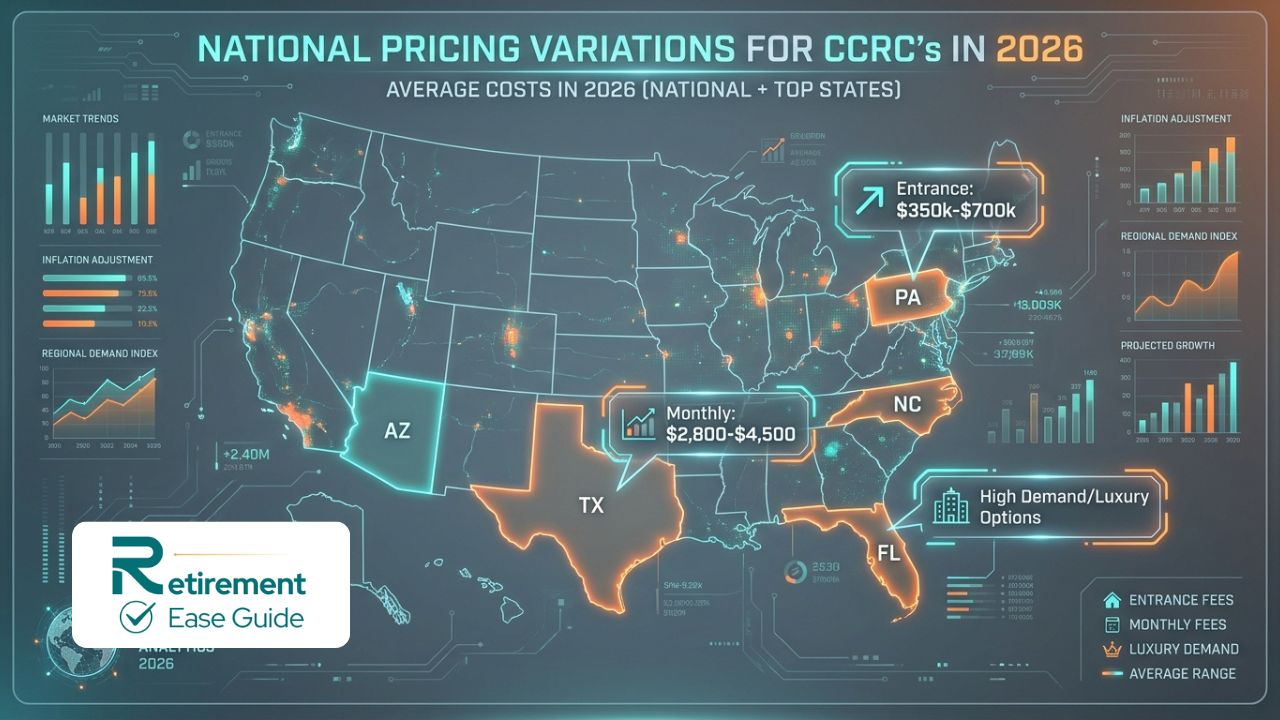
Regional Variations
Costs are heavily influenced by location, real estate values, and local labor markets.
| Region / State | Avg. Entrance Fee | Avg. Monthly Fee (IL) | Notes |
| Florida | $250,000 – $600,000 | $3,800 – $5,500 | Higher insurance costs |
| Arizona | $220,000 – $550,000 | $3,200 – $4,800 | Strong value in Phoenix/Tucson areas |
| Pennsylvania | $350,000 – $700,000 | $3,900 – $5,800 | Many established high-end communities |
| North Carolina | $200,000 – $450,000 | $3,000 – $5,000 | Excellent value in many markets |
| Texas / Midwest | $180,000 – $400,000 | $2,800 – $4,500 | Often the most affordable regions |
*Figures are realistic 2026 ranges synthesized from NIC, LeadingAge, and industry reports. Actual pricing depends on contract type, unit size, and community.
Factors That Affect CCRC Costs
Several key variables determine your final continuing care retirement community cost:
- Contract Type — Type A is most expensive upfront but offers the greatest long-term protection.
- Unit Size & Type — Larger apartments or villas command higher fees.
- Location — Coastal or urban markets cost more than suburban or rural ones.
- Refundability — 90% or 50% refundable entrance fees are higher than non-refundable.
- Amenities & Services — Communities with extensive wellness programs, fine dining, or on-site clinics charge more.
- Age & Health at Move-In — Healthier residents at younger ages often qualify for better rates.
- Inflation Adjustments — Most contracts include annual increases (typically 3–5%).
CCRC Contract Types Explained – Cost Comparison
Check Health Insurance Options Before Moving to a New State
| Contract Type | Entrance Fee Range | Monthly Fee (IL) | Future Care Cost | Best For |
| Type A (Life Care) | Highest ($300k–$1M+) | Higher | Largely prepaid | Those wanting maximum predictability |
| Type B (Modified) | Mid-range ($200k–$600k) | Moderate | Partial discount | Balance of cost and protection |
| Type C (Fee-for-Service) | Lowest ($100k–$400k) | Lower | Pay market rate | Healthier residents comfortable with risk |
Is a CCRC Worth the Cost? Pros, Cons & ROI
Pros
- Lifetime care guarantee on one campus
- Predictable budgeting (especially Type A)
- Strong social and wellness programs
- High resident satisfaction and security
Cons
- Large upfront capital requirement
- Monthly fees can still rise with inflation
- Application and financial review process can be lengthy
- Not all communities accept Medicaid for long-term care
For many, the cost of continuing care retirement community delivers strong ROI through peace of mind and protection against skyrocketing long-term care expenses later in life.
How to Afford a Continuing Care Retirement Community?
- Use Home Equity — Many residents sell their home and apply proceeds toward the entrance fee.
- Long-Term Care Insurance — Some policies can help cover higher levels of care.
- Strategic Timing — Moving in while still healthy often qualifies you for better rates.
- Financial Planning Tools — Work with an advisor to model scenarios using a retirement income estimator or withdrawal planner.
- Look for Value Communities — Some excellent CCRCs in North Carolina, Texas, and parts of Arizona offer strong amenities at more accessible price points.
Comparison: CCRC vs Other Senior Living Options
| Option | Entrance Fee | Monthly Cost (Typical) | Care Guarantee | Best For |
| CCRC (Life Plan) | $100k–$1M+ | $3,500–$7,000+ | Lifetime on campus | Long-term security |
| Independent Living | Usually none | $2,500–$4,500 | None | Active, healthy seniors |
| Assisted Living | Usually none | $4,500–$6,500 | None | Daily help needed |
| Rental Senior Housing | Low or none | $2,000–$4,000 | None | Flexible, lower commitment |
Conclusion
Understanding the cost of continuing care retirement community in 2026 is one of the smartest steps you can take toward a secure and worry-free retirement. While the numbers can feel substantial, the value lies in the lifetime care guarantee, predictable budgeting, and the peace of mind that comes from knowing your future needs are covered.
Every family’s situation is unique. The right CCRC can be an excellent investment in your health, happiness, and financial security.
At Retirement Ease Guide, we connect you with the right continuing care retirement communities that best match your lifestyle, care needs, and budget. We work with top Life Plan Communities across the country to help you compare options, understand contract details, and get clear pricing information tailored to your situation.
Get your free, no-obligation personalized CCRC recommendations today. Click here to get matched with the right communities now.
Frequently Asked Questions
How much does a continuing care retirement community cost in 2026?
National averages show entrance fees around $400,000 and monthly fees of $3,500–$4,500 at the independent living level, with wide regional and contract-type variation.
Are CCRC entrance fees refundable?
Many are partially or fully refundable (50%–100%). Refundable options cost more upfront.
Do monthly fees increase as I age or need more care?
It depends on the contract. Type A offers the most protection; Type C fees can rise significantly.
Is a CCRC more expensive than independent living?
Yes, usually — but you’re paying for guaranteed future care and extensive amenities.
Can I finance a CCRC entrance fee?
Some communities offer financing; many residents use home sales or retirement savings.
Do CCRCs accept Medicaid?
Most do not for long-term care, though some have Medicaid-certified nursing beds.
What is the difference between CCRC costs and life plan community pricing?
They are the same thing — “Life Plan Community” is the modern term many CCRCs now use.
Are there affordable continuing care retirement communities?
Yes — look in Texas, North Carolina, and parts of Arizona for stronger value.